Keep your project list organized and clear by archiving past projects.
This way, these projects do not interfere with the current work of you and your team, while you still have access when you need them.
By archiving, you also ensure accurate documentation of the projects, as they can only be accessed in read-only mode, which prevents any later changes.
To archive your project, follow these steps:
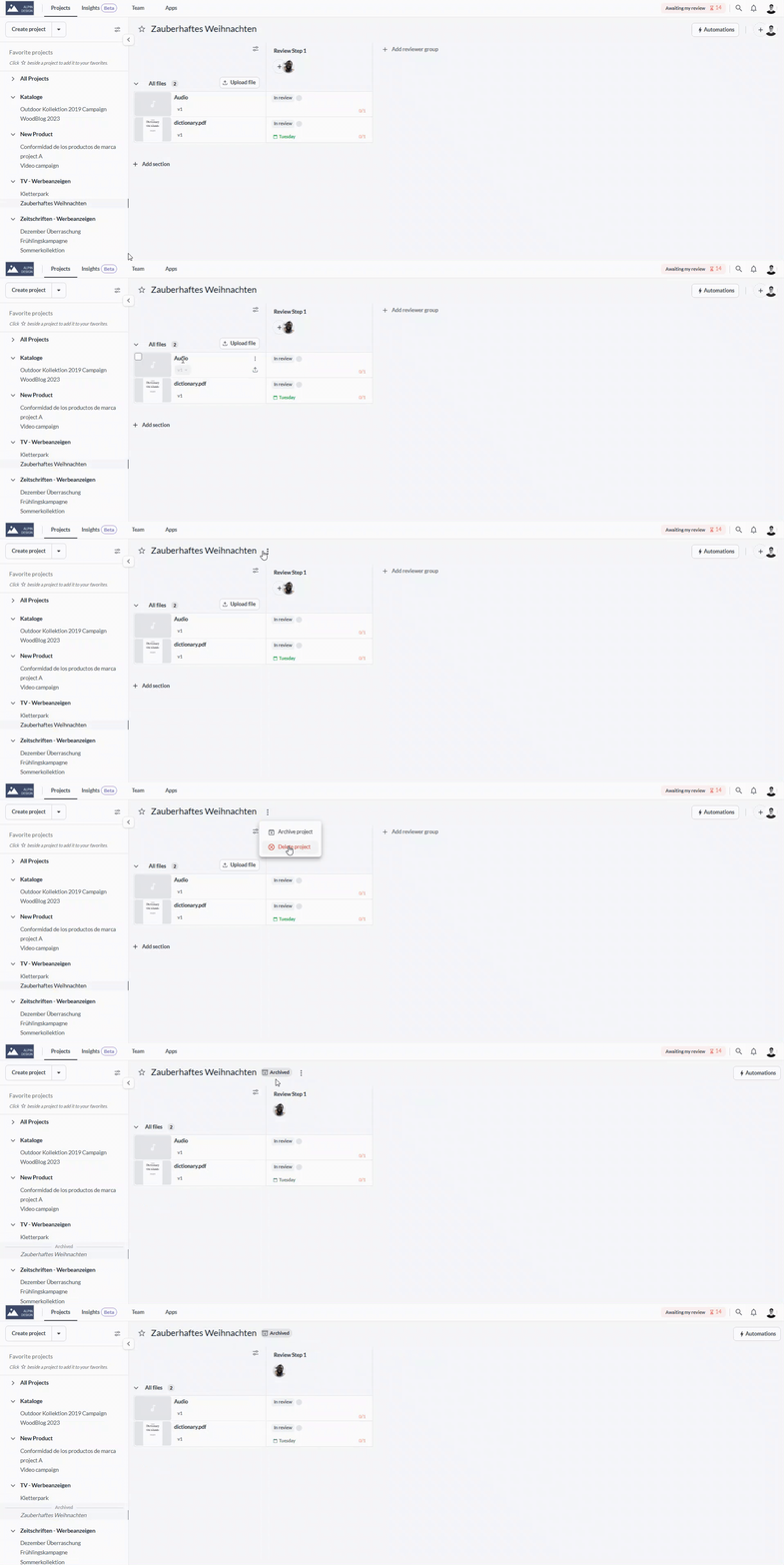 |
Under certain circumstances, folders can also be archived. The following conditions must be met to archive a folder:
If a folder contains at least one active project inside it or any of its subfolders, then it will be visible, together with all of its subfolders.
In other words:
If a folder and all of its subfolders do not contain any active projects, it is archived together with the last active project. This applies only to main folders (the first-level folders), while subfolders are only archived together with the main folders
Once archived, your projects disappear from the standard project list. To view them again, do the following:
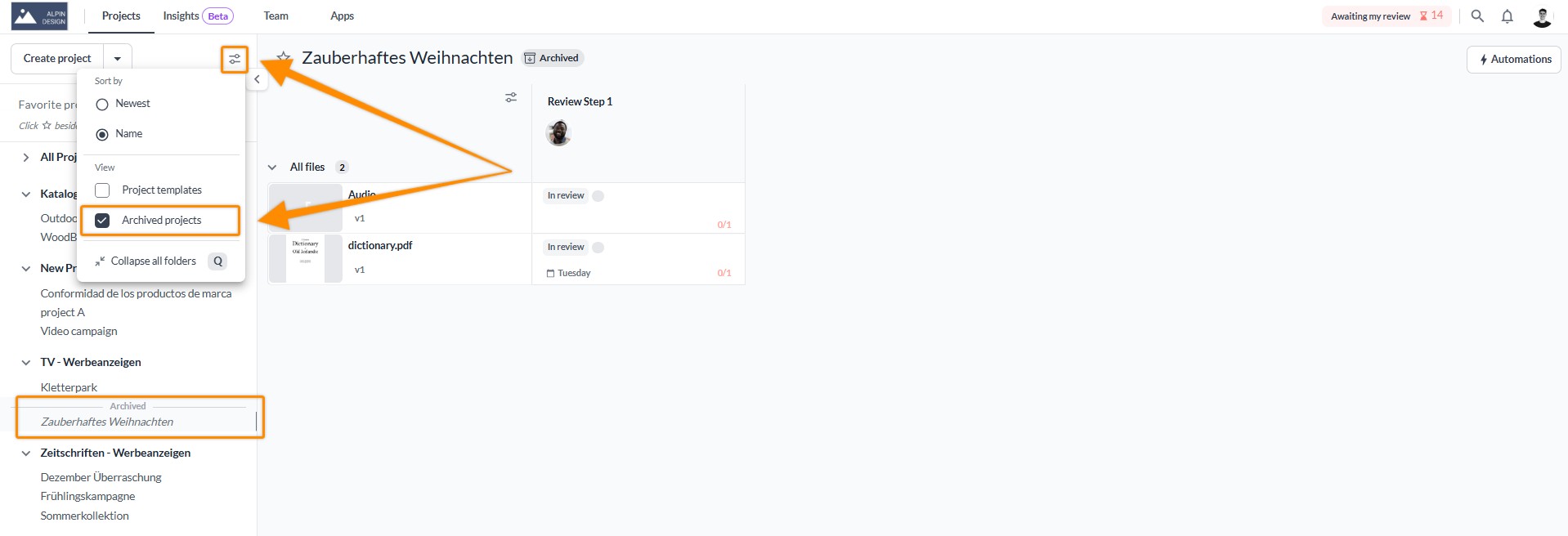 |
There might be situations when a project needs to be reactivated. This is easily possible - simply unarchive the project and it returns to the previous state as an active project.
To unarchive projects, follow these steps:
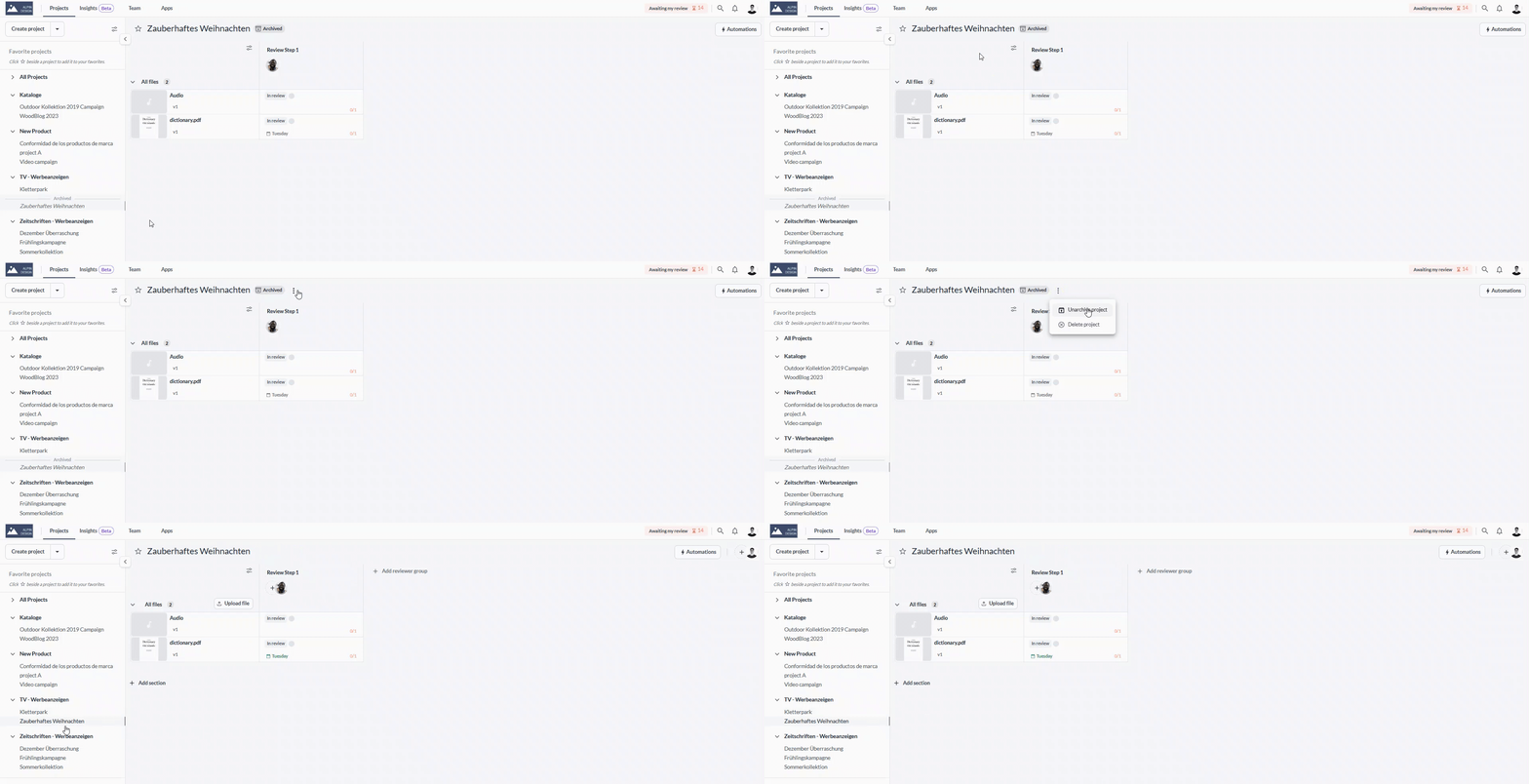 |
Archived projects do not count against your project limit. This means that you can store an unlimited number of archived projects.
Archived projects count against your storage limit.

💡What´s next? After understanding how to archive projects to keep them for documentation, see how to set up your project.
If you have any questions or comments, please contact us through chat or email at [email protected].
